Aarathi Selvan (She/They)
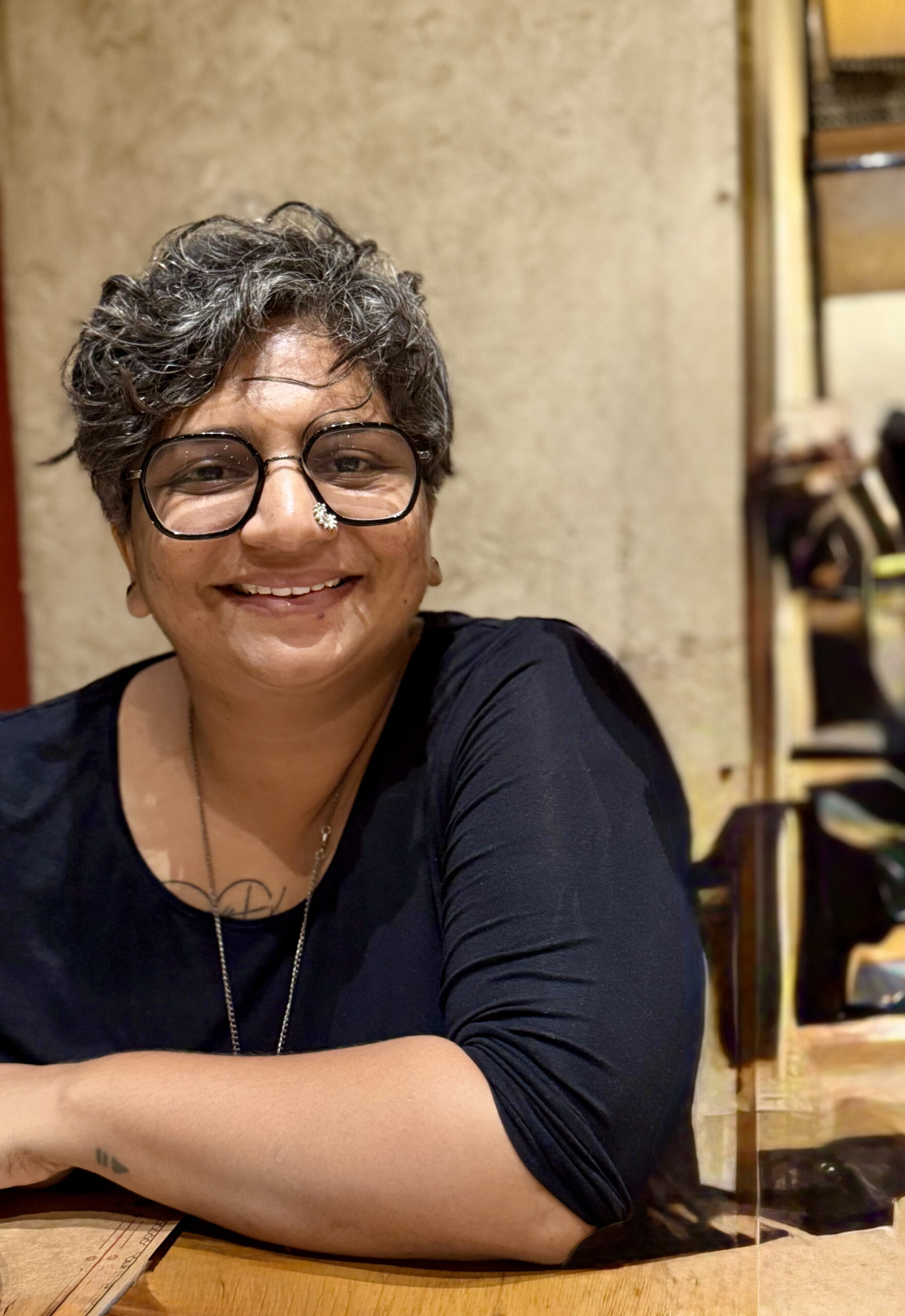
Aarathi Selvan (they/them)
I often find myself sitting with people who are trying to understand how they became who they are, why certain patterns keep returning, and what it might mean to live with more honesty, dignity, and connection.
People come to therapy for many reasons. Sometimes there is grief, anxiety, conflict, loneliness, trauma, or a feeling of being stuck. Sometimes there are questions around identity, relationships, family, sexuality, gender, caste, work, parenting, or belonging. Sometimes people are not looking for solutions as much as they are looking for a space where they do not have to hold everything alone.
In my work, I try to listen not only to what has been difficult, but also to what people have done to continue. I am interested in the small and large ways people survive, refuse, care, protect, long, hope, and make meaning. I do not see therapy as a place where people are fixed. I see it as a space where we can slow down together and understand what a person’s experiences, relationships, histories, and contexts are asking of them.
My work is deeply shaped by the belief that our lives cannot be separated from the worlds we live in. Experiences of caste, class, gender, sexuality, disability, neurodivergence, religion, family, community, and other social realities shape how we relate to ourselves and others. I am interested in how these realities live in our bodies, our choices, our relationships, and our sense of what is possible.
I work with individuals, couples, families, groups, and communities. My practice is collaborative, relational, and grounded in curiosity. I hope to create a space where people can bring what is messy, unresolved, tender, or contradictory without having to perform clarity or certainty.
Alongside my work as a therapist, I teach, supervise, write, and train mental health practitioners. I am the founder of Pause for Perspective and the developer of Embodied Social Justice, an approach that brings together counseling, mindfulness, embodiment, and social justice. My research has explored how people experience their bodies as a way of responding to systemic oppression and privilege, and this continues to shape my practice.
At the heart of my work is a commitment to meeting people within the fullness of their lives. I am interested in therapy that makes room for pain, accountability, care, protest, resistance, connection, and new possibilities for living.
Qualifications/Certifications
- Ph.D Counseling Psychology, Madras University,
- MPhil – Clinical Psychology, Osmania University (India), Clinical Psychologist (NZ)
- EDM Psychological Counseling (Columbia University, USA),
- MA Psychological Counseling (Columbia University, USA),
- Clinical Psychologist, Mental health counselor with over 13 Years of Experience
- Licensed psychotherapist (US, NZ & India).
- Supervision Skills for Health & Social Service Professionals, New Zealand Coaching and Mentoring Services.
- Trauma Sensitive Mindfulness, TSM, David Treleaven
- Conflict as Generative, Generative Somatics, USA
- Rise, A training program for Relational Facilitators, CourageRise, USA
- Trained in Mindfulness at the Ottawa Mindfulness Clinic, Canada
- EMDR at EMDR India
- Queer Affirmative Counseling Practitioner, Mariwala Health Initiative, India
- Imago Therapy, Imago Relationships International, NZ & USA
- Developmental Model of Couples Therapy, Couples Institute, USA
- Intuitive Eating, USA
- Trained in Trauma at the Institute for Contemporary Psychotherapies
- Trained in spiritual modalities of psychotherapy at the Association of Spirituality &Psychotherapy, NY
- Other trainings that she has invested in are CBT, IPT, Narrative therapy and SFBT
I deeply value my work as a therapist. At present, I am especially engaged in offering consultations with individuals, couples, groups, and families of diverse forms and experiences. My practice is grounded in an intersectional lens that is anti-caste, rooted in disability justice, and queer-affirmative. I center the understanding that our bodies are sites of liberation. By honoring, tracing, and staying present with our lived experiences, we open pathways toward both individual and collective liberation.
Aarathi Selvan